Cafetière
- Grind
- Medium-coarse
- Ratio
- 15g / 225g
- Water
- 92–94°C
- Time
- 4 minutes
The method that flatters this coffee most. It keeps the oils that carry the body, which is the whole point of a cup like this. Plunge slowly.
 Gayo Wild®
Getting It Right
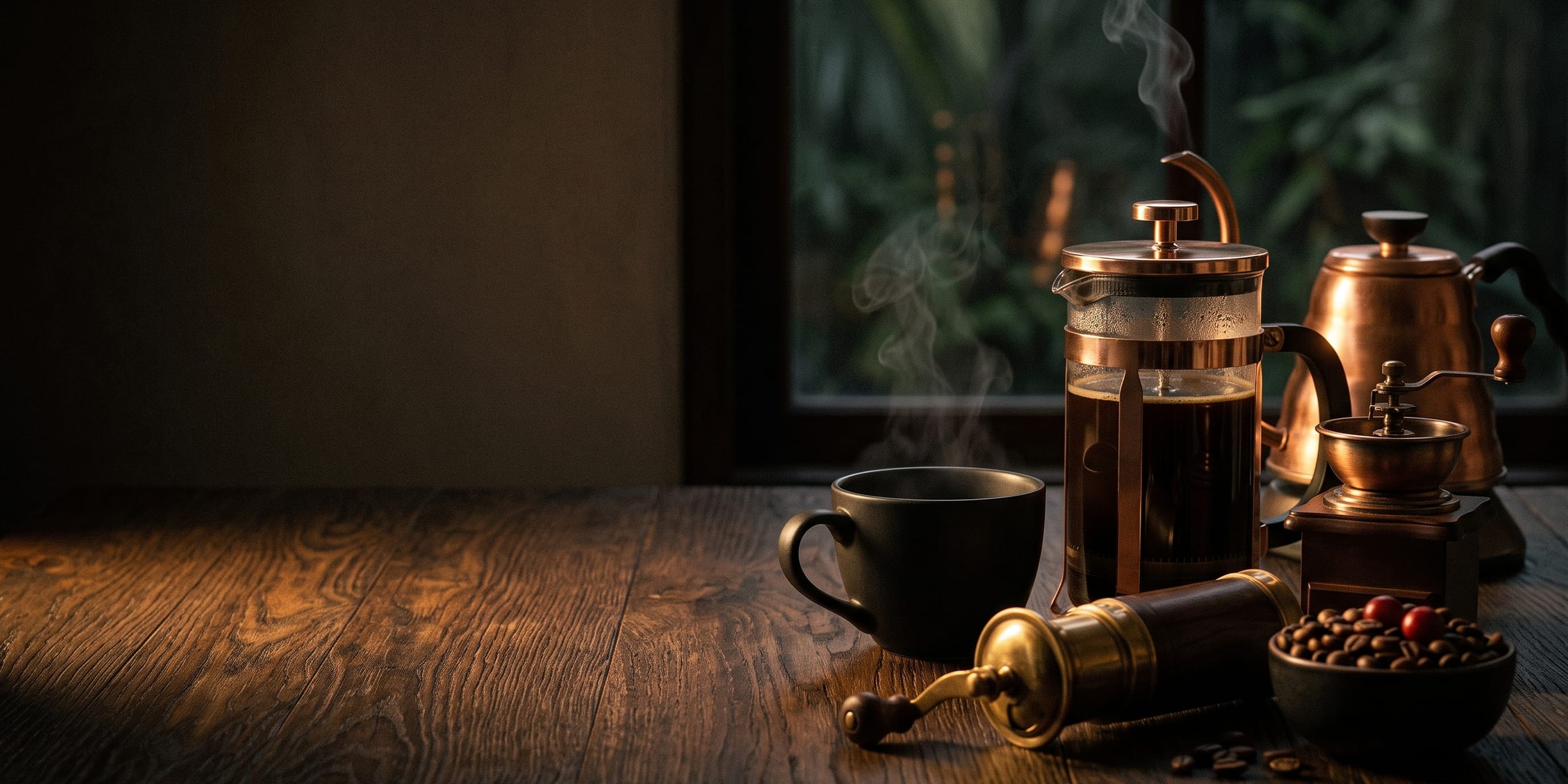
Kopi Luwak is low in acidity and high in body, which makes it forgiving — but also easy to flatten. Three things matter more than your equipment: the grind, the water temperature, and drinking the first cup black.
The Rules
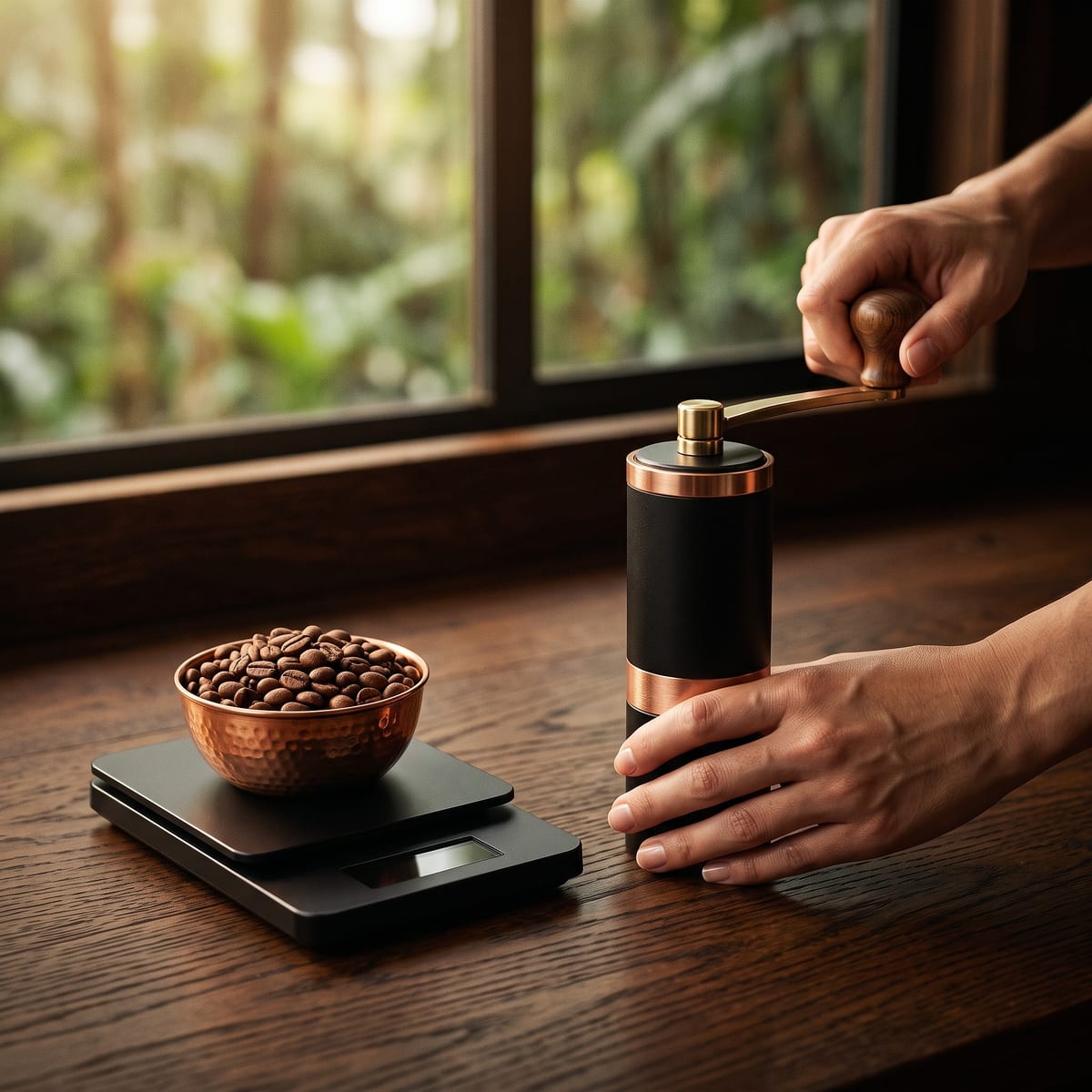
These are whole beans for a reason. Ground coffee loses its aromatics within minutes, and at this price that is a waste. Grind immediately before brewing.
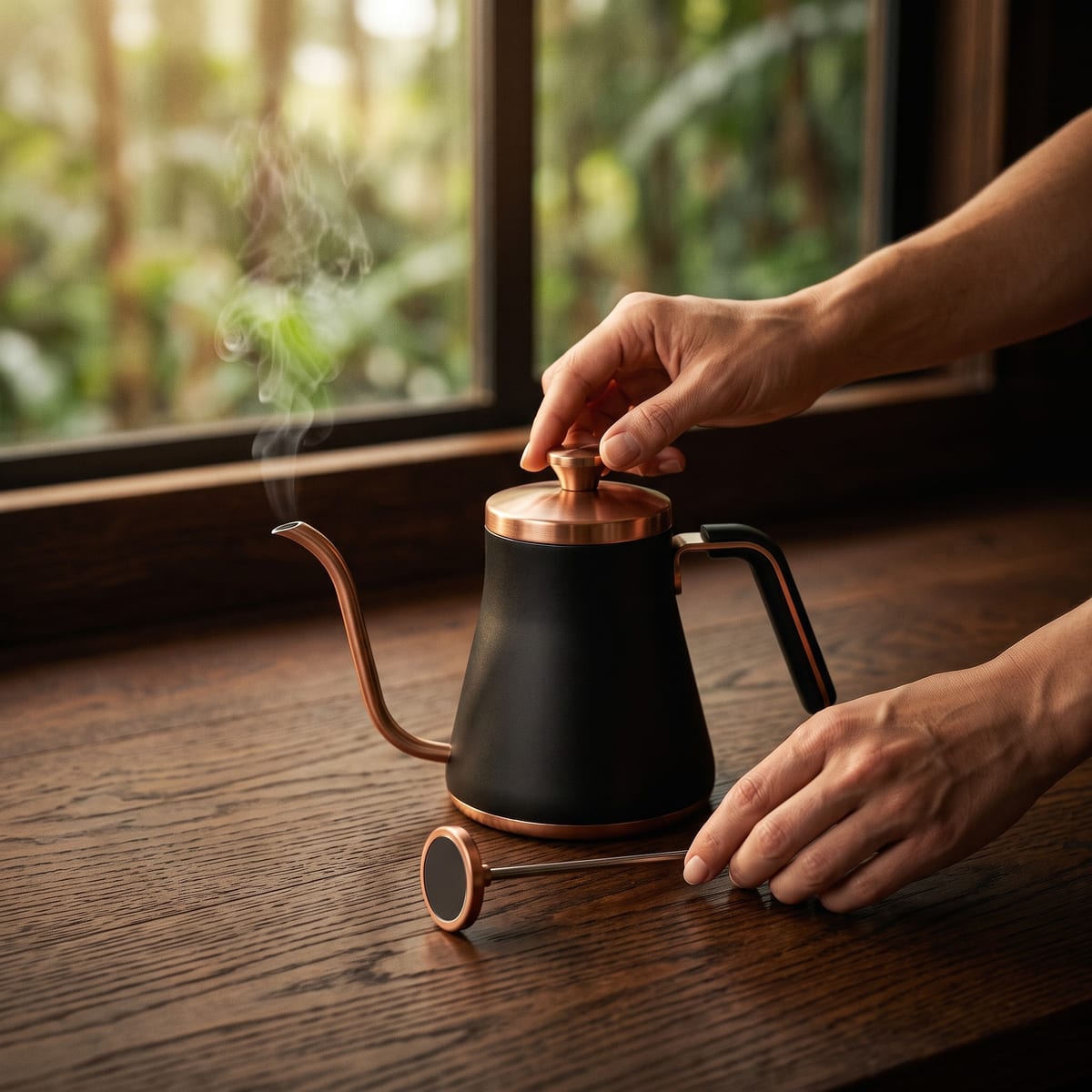
Boiling water scorches a low-acidity coffee and strips the sweetness. Boil the kettle, then wait about sixty seconds before pouring.
This coffee is smooth enough not to need milk, and milk buries the cocoa, caramel and spice you paid for. Add milk on the second cup if you still want to.
The Ritual
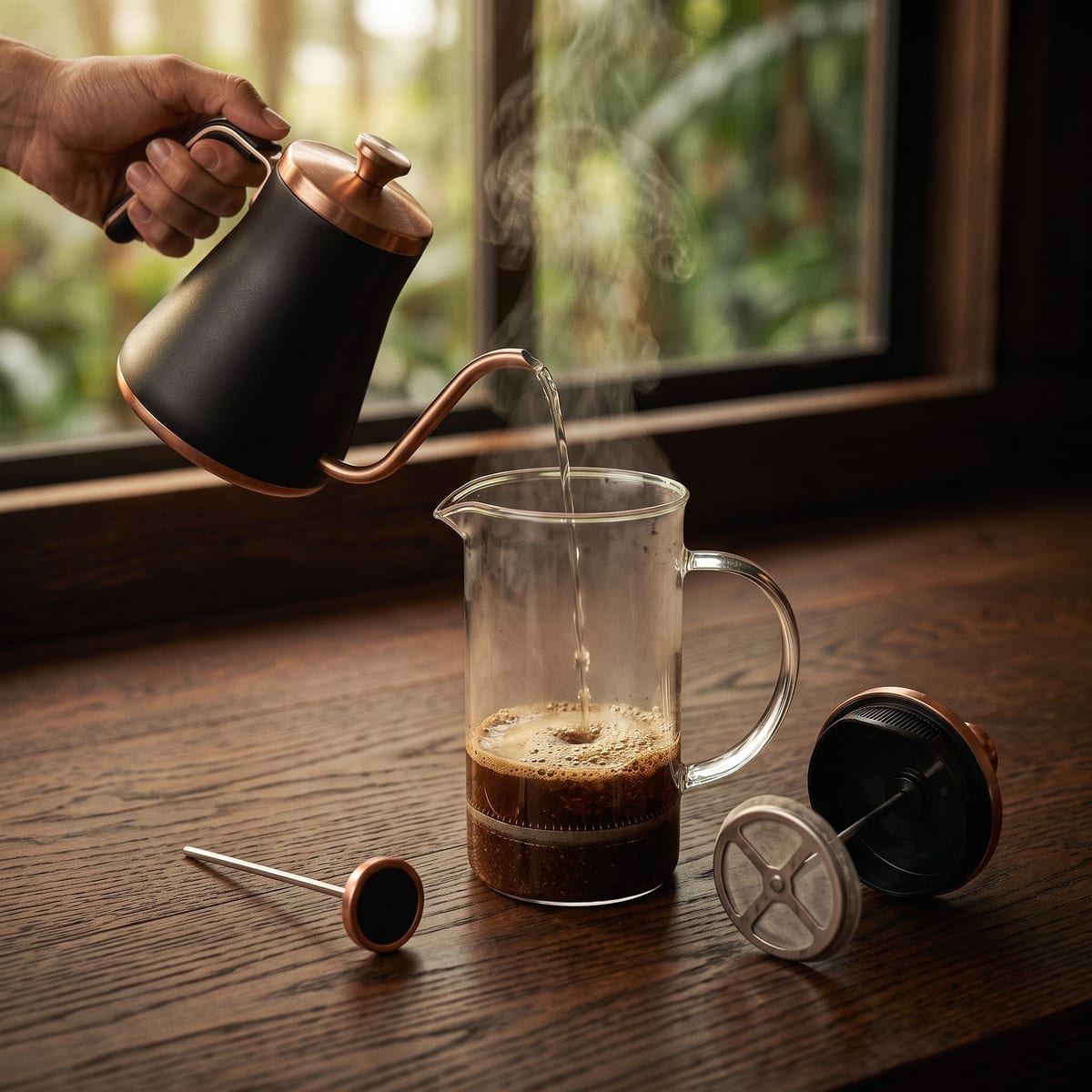
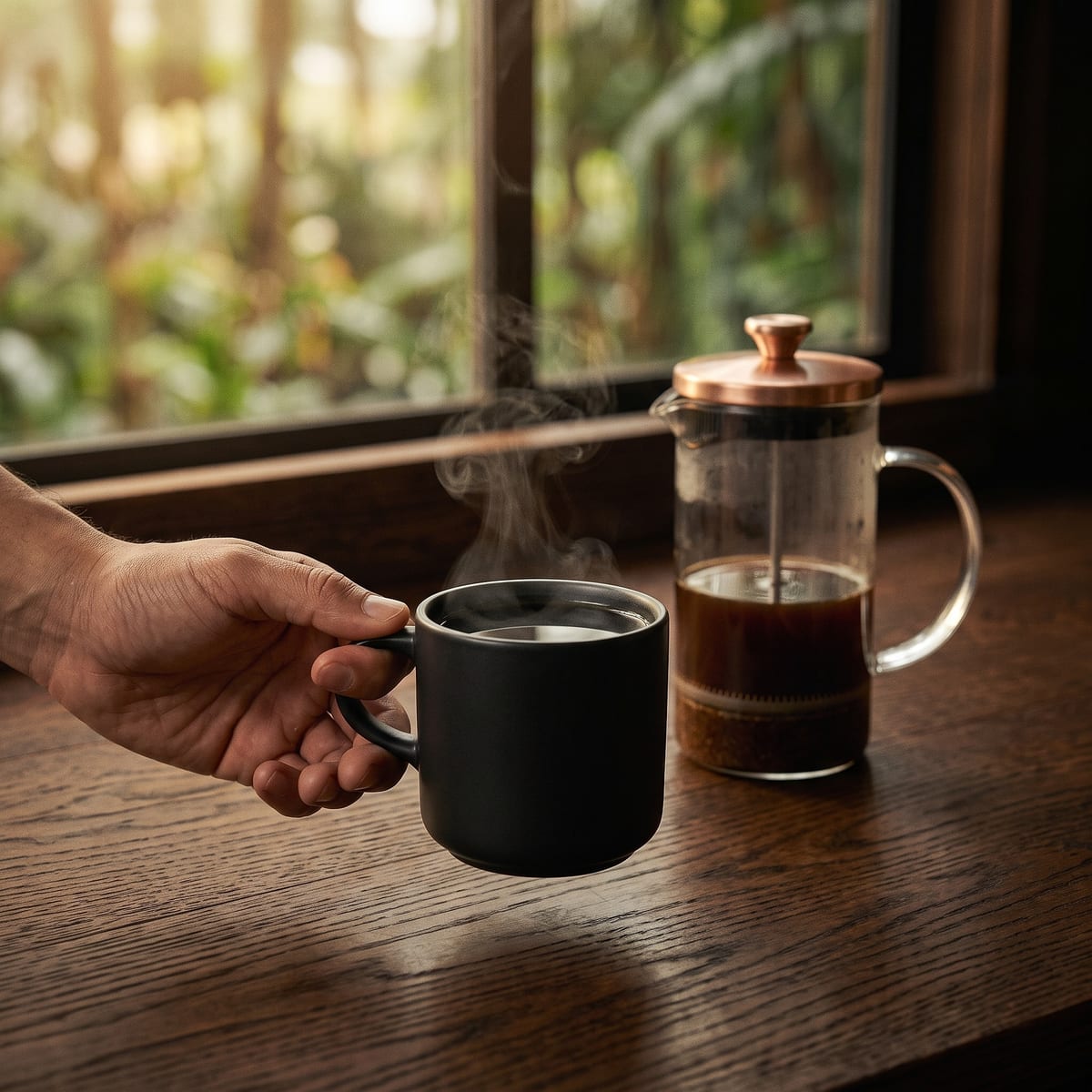
The cafetière method, which flatters this coffee most.
Ratios
The baseline everywhere is 1:15 — 15g of coffee to 225g of water, about one large cup. Start there, then adjust to taste rather than starting somewhere else.
The method that flatters this coffee most. It keeps the oils that carry the body, which is the whole point of a cup like this. Plunge slowly.

Cleaner in the cup, and the one that shows the caramel most clearly. Bloom with twice the coffee's weight in water, then pour in slow circles.
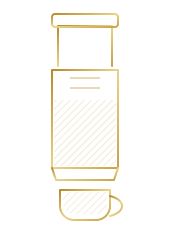
The most forgiving and the most repeatable. If you are nervous about wasting a rare coffee, start here.
Two More
Espresso. Fine grind, 18g in, 36g out, 27–30 seconds. It works, but it spends a great deal of a very rare coffee on a very small cup. We would start elsewhere.
Traditional Sumatran. Fine grind, hot water poured straight over it in the cup, left to settle before drinking. No filter, no equipment. This is how it is drunk in Gayo, and it is worth trying at least once.
Tasting
Give the cup ten minutes. Kopi Luwak changes as it cools more than most coffees do, and the caramel and spice usually arrive after the initial cocoa.
You are looking for a velvety body, very low acidity, dark cocoa and a gentle earthiness. What you should not find is sourness or a muddy finish — those are the faults the natural fermentation removes, and their presence is a reasonable sign of caged production.
Keeping It
Keep Reading
What you are actually brewing, and why it behaves differently in the cup.
Whole roasted beans from the Gayo Highlands, sealed at origin.
Who grew it, and how it reached you.
Stock Up
Wild Kopi Luwak from the Gayo Highlands, whole beans, sealed at origin.
Delivery is shown here before you pay. Outside the UK, import VAT and duties are paid on arrival.
Delivery outside the UK: our prices do not include import VAT, customs duty or the carrier’s handling fee. Your country’s customs or carrier may charge them when the parcel arrives, and you are responsible for paying them. If you refuse the parcel or don’t pay, we refund it once it is back with us, less the return cost; abandoned or destroyed parcels are not refunded.
Card, Apple Pay & Google Pay via Stripe