Our Traceability
The chain the journey produced: origin, handling, processing, and its limits.
 Gayo Wild®
Chapter I · The Discovery
It began with a cage on a tourist road in Bali. It led to a forest at the northern tip of Sumatra where nothing had ever been caged at all — and where, today, you are welcome to follow.
Bali, 2024
Our road here started somewhere ordinary: a roadside plantation in Bali, one of the many that invite passing visitors to taste the most famous coffee in the world.
The ceremony was immaculate. Polished cups, a carved tasting deck, a view across the green. Behind it, just outside the frame of the brochure, were the civets — kept in wire cages scarcely longer than their own bodies, with a bowl of coffee cherries and nothing else. One of them paced the same eighteen inches, back and forth, without pause.
And the coffee was good. That was the hardest part to accept.
In a single cup, it was possible to understand exactly how an entire industry had persuaded itself that this was acceptable.
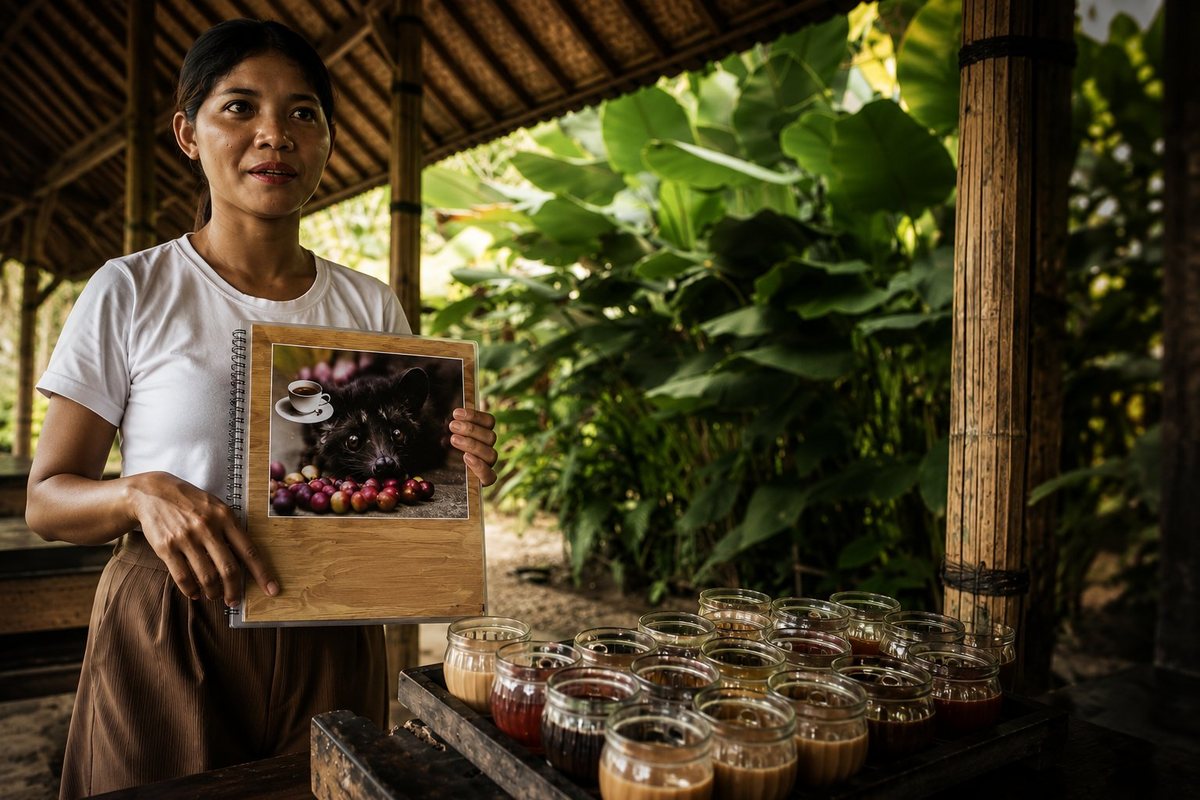
A roadside tasting in Bali — the kind advertised along every tourist road.
The Question
The easy response would have been to walk away and never drink Kopi Luwak again. The more useful one was a question. Long before it was famous, this coffee was simply wild: a gift of civets roaming free through the coffee gardens at night. Was anyone, anywhere, still gathering it that way?
Someone was. Not in Bali, and nowhere that advertised to tourists, but in the far north of Sumatra. Reaching them meant leaving the tourist roads behind entirely: a flight to Medan, a small propeller plane to Takengon, and a long drive up into the mountains.
Aceh, Sumatra
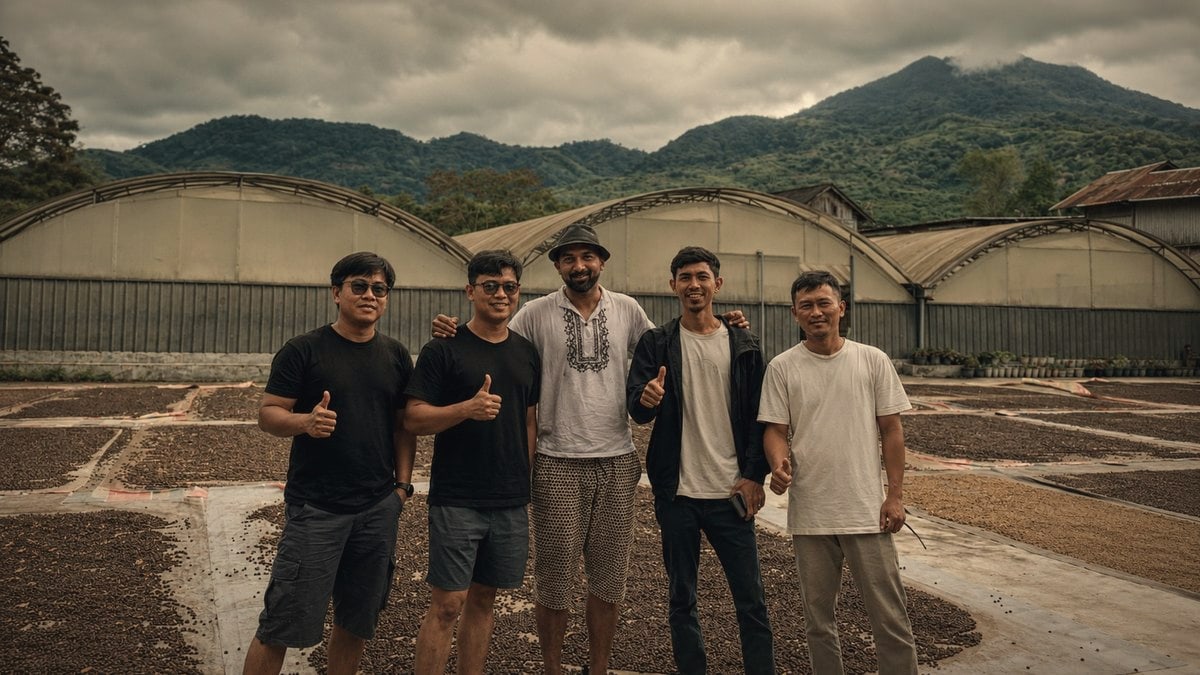
The Gayo Highlands rise to between 1,400 and 1,600 metres in Aceh, at the northern tip of Sumatra. Cool, misted and steeply forested, they are one of the great Arabica regions of the world, and still almost unknown beyond the coffee trade.
Here, the farming families had been collecting wild luwak coffee for generations — quietly, without ceremony, as a small part of ordinary coffee farming. Nobody kept civets in cages, because nobody had built a business that demanded it. The volumes were tiny, and to the families the practice was unremarkable: when the beans appeared on the forest floor, you gathered them.
It was everything the roadside in Bali was not. And it had been here all along.
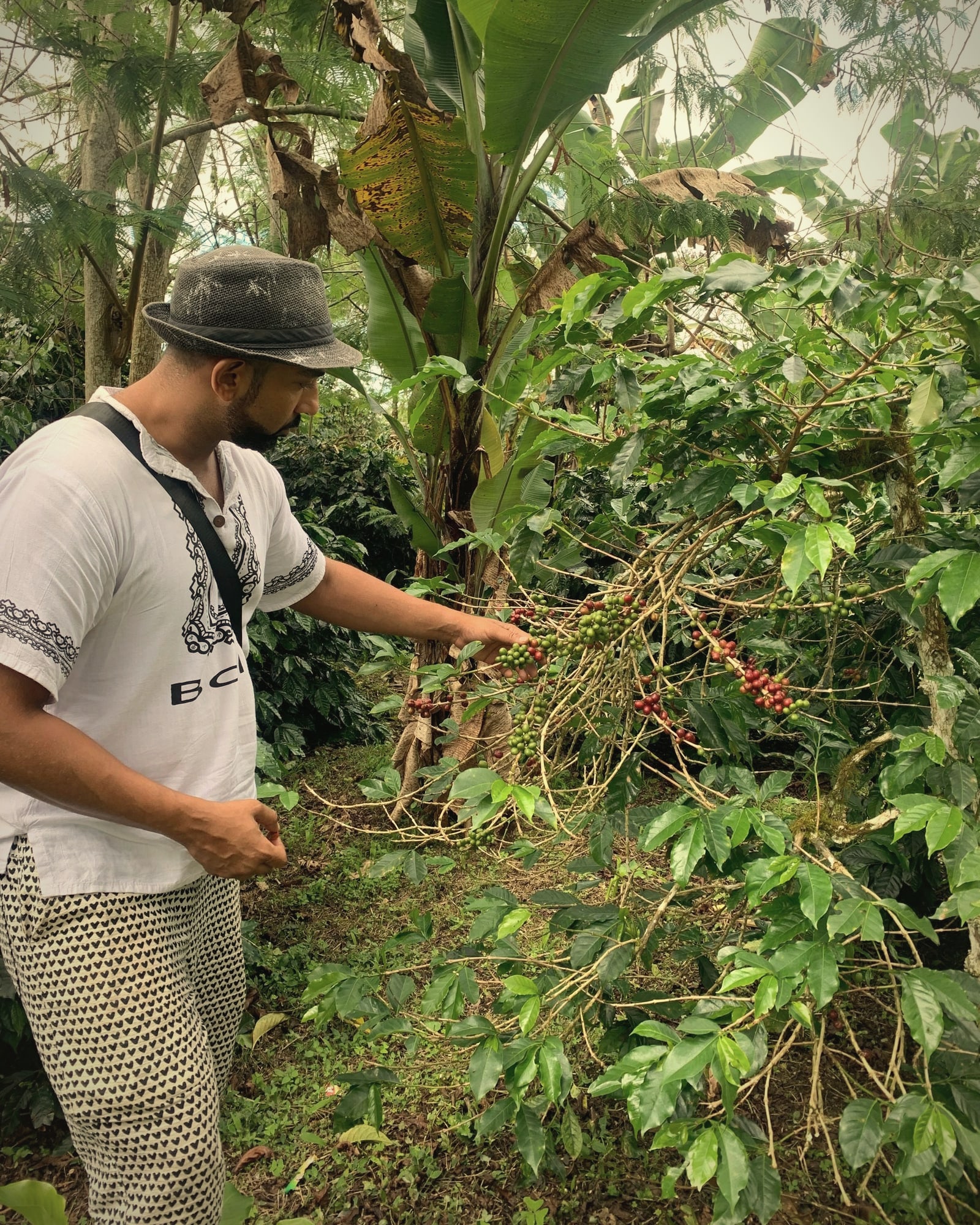
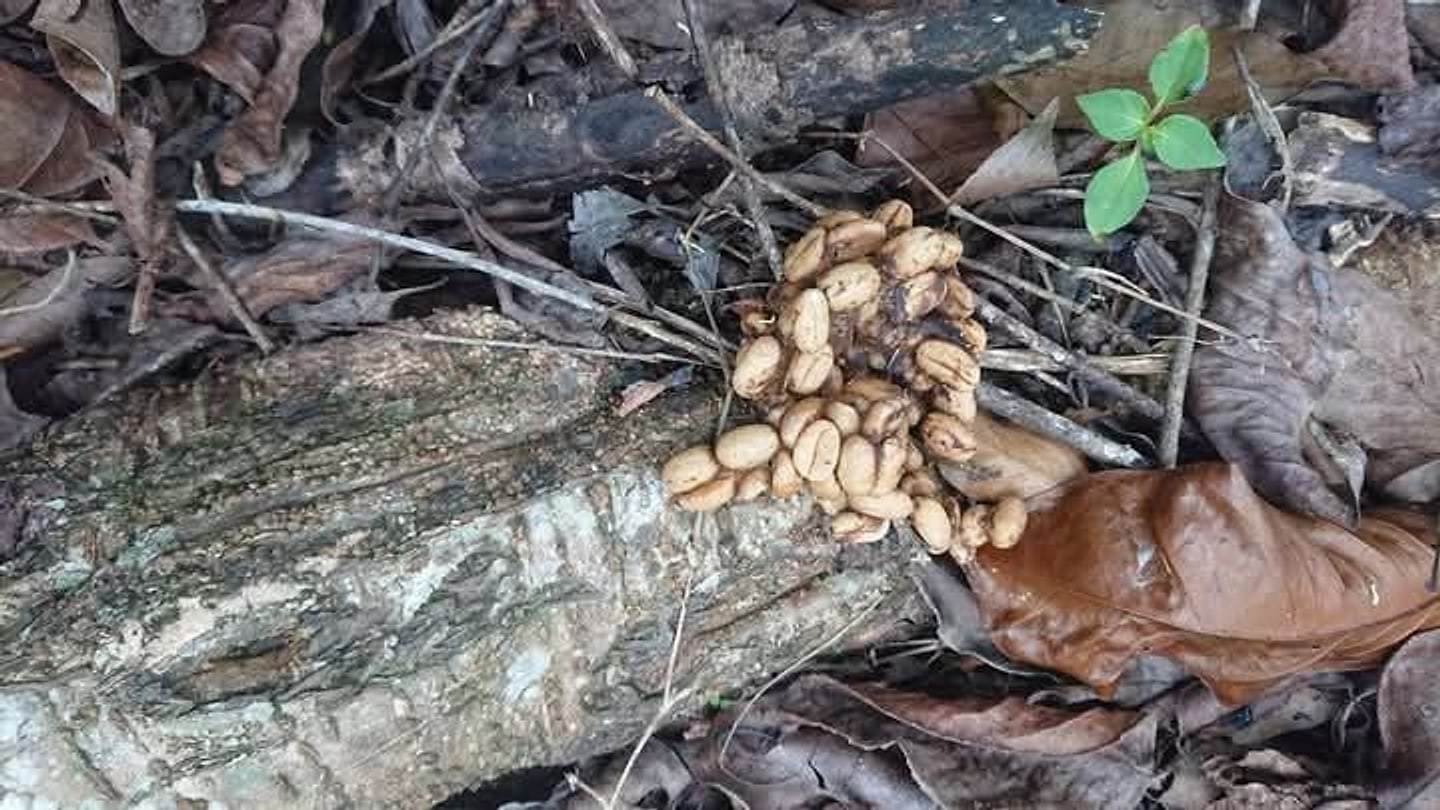
What the collectors showed us: one wild civet’s choice, left on a log. Their phone photograph, not retouched.
The Agreement
What followed were repeated visits, long conversations over coffee, and trust earned slowly on both sides. The agreement that emerged was simple to state and demanding to keep: buy directly from the families, pay them properly, take only what the forest gives, and never cage anything.
Every bag of Gayo Wild is held to those terms. They cost more, and they limit how much we can ever sell. That is precisely the point.
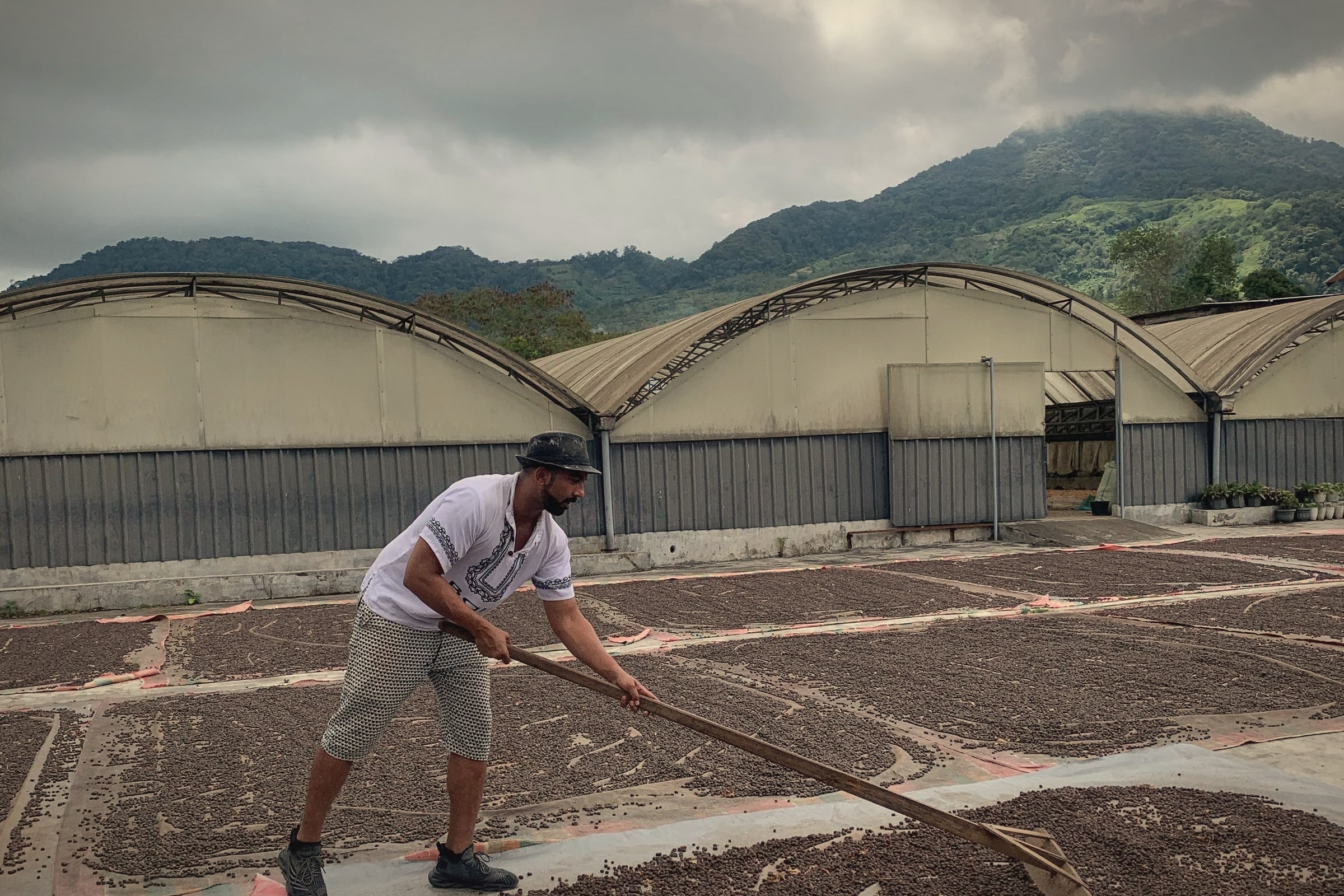
The Promise
The Film
Thirty seconds in the Gayo Highlands: mist over the ridges at dawn, a civet at the cherries, and the hands that gather what it leaves behind.
Take only what the forest gives. It turns out that is also the only way to make it taste like this.
The Turning Point
The proof of wild Kopi Luwak is not a certificate. It is a forest, and you are invited into it.
Keep Reading
The chain the journey produced: origin, handling, processing, and its limits.
The question that started the whole thing, answered properly.
See it for yourself: the forest where the civets roam, and the hands that gather their coffee.
The Result
Wild Kopi Luwak from the Gayo Highlands, sealed at the farm and shipped free within the UK.
Delivery is shown here before you pay. Outside the UK, import VAT and duties are paid on arrival.
Delivery outside the UK: our prices do not include import VAT, customs duty or the carrier’s handling fee. Your country’s customs or carrier may charge them when the parcel arrives, and you are responsible for paying them. If you refuse the parcel or don’t pay, we refund it once it is back with us, less the return cost; abandoned or destroyed parcels are not refunded.
Card, Apple Pay & Google Pay via Stripe