The Vintner
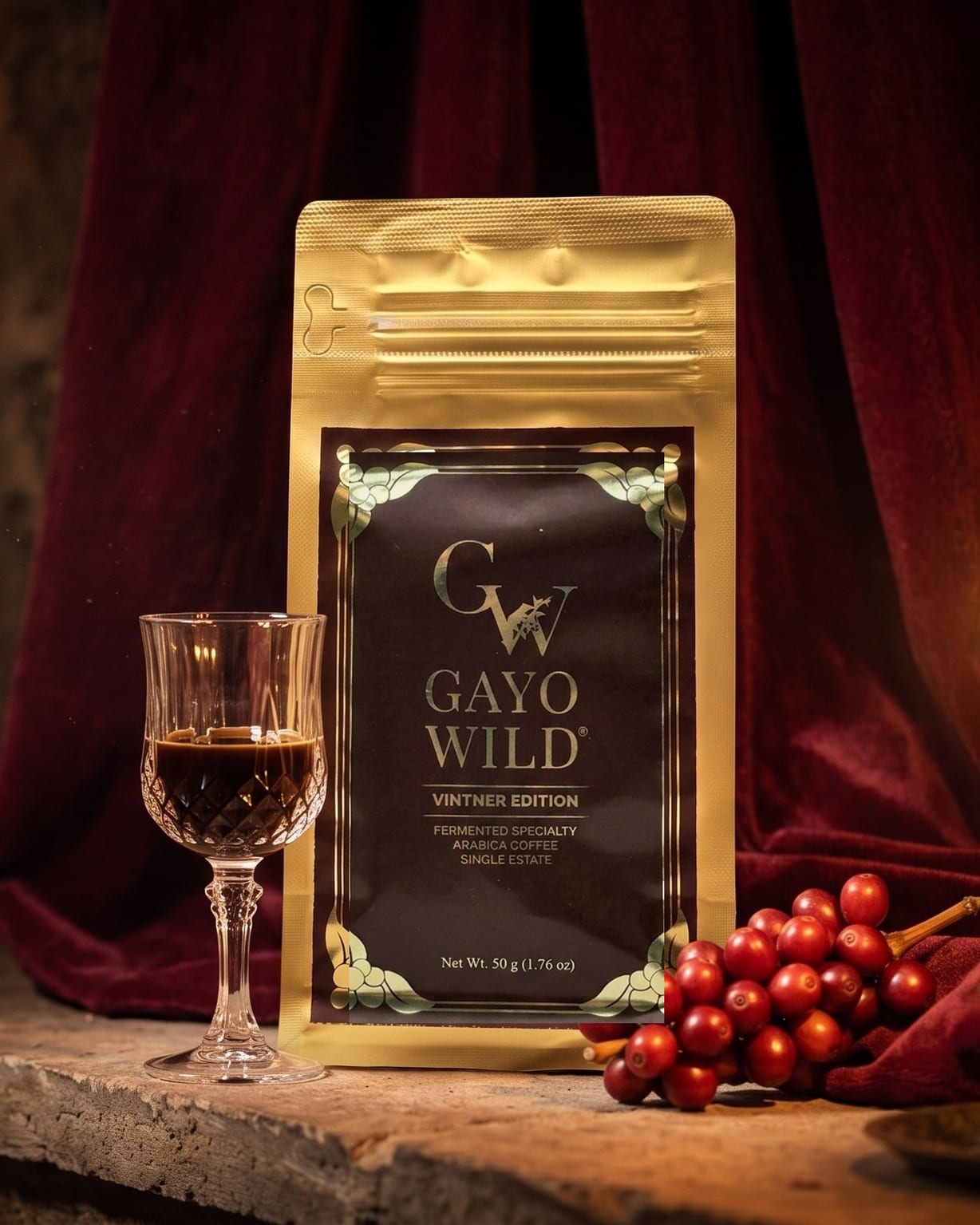
Our current limited edition: twenty-five days of anaerobic fermentation, red berry, stone fruit and a long cocoa finish.
 Gayo Wild®
Beyond Washed and Natural
For most of its history, coffee has been processed in one of a few familiar ways. Experimental coffee is what happens when producers start borrowing from winemakers and brewers, and the cup changes completely.
The Basics
Between the tree and the roaster, every coffee bean has to be freed from the fruit around it. How that is done shapes the flavour almost as much as where the coffee grew.
Most coffee is washed (the fruit is stripped away, the beans soak briefly, then dry), natural (the whole cherry dries in the sun with the bean inside) or honey (somewhere in between). These methods account for nearly every cup you have ever had.
Experimental coffee changes the variables: how much oxygen the fruit sees, how long it ferments, at what temperature, and with which microbes. The aim is flavour the classic methods cannot reach.
The Methods
Our Experiment
The Vintner is Gayo Arabica from the same Sumatran highlands as our wild Kopi Luwak. The ripe cherries ferment for twenty-five days in sealed, oxygen-free tanks before processing, a long anaerobic fermentation borrowed from winemaking. Most coffee spends a day or two fermenting, if it ferments at all.
The result tastes closer to a young red wine than to an everyday coffee: red berry and stone fruit up front, settling into a long cocoa finish. It is the current release in our Limited Editions, the rare coffees we offer from time to time alongside our flagship wild Kopi Luwak, and it is not Kopi Luwak: no civet is involved at any stage.
Brewing
Is It for You?
If your favourite cup is a dark, classic roast, an experimental coffee may surprise you more than it pleases you, and that is fine. If you have ever wondered what coffee can taste like beyond chocolate and nuts, this is where to begin.
Keep Reading
Our current limited edition: twenty-five days of anaerobic fermentation, red berry, stone fruit and a long cocoa finish.
Ratios, grind and water temperature, by method.
Wild Kopi Luwak in two sizes, and The Vintner. Free UK delivery.
Limited Edition
Our experimental lot: 50g, three or four cups, with free UK delivery.
Delivery is shown here before you pay. Outside the UK, import VAT and duties are paid on arrival.
Delivery outside the UK: our prices do not include import VAT, customs duty or the carrier’s handling fee. Your country’s customs or carrier may charge them when the parcel arrives, and you are responsible for paying them. If you refuse the parcel or don’t pay, we refund it once it is back with us, less the return cost; abandoned or destroyed parcels are not refunded.
Card, Apple Pay & Google Pay via Stripe